A stethoscope is, at its core, a sound-transmission device: it picks up vibrations inside a patient’s body — heartbeats, breath sounds, bowel activity — and carries them to your ears so you can assess what’s happening. The better the acoustic performance (how clearly and accurately it transmits those sounds), the more clinical information you actually get. That sounds obvious, but the market spans a $20 disposable and a $300 cardiology instrument, and the difference in what you hear is genuinely not trivial. If you’re a year or two into practice and still using the stethoscope that came with your student kit, this article is for you. We’ve gone through the published specs, aggregated owner reviews, and specialty-practice literature so you can make a single smart purchase — not a series of regrets.
Here’s the honest framing: acoustic performance is not a single number. It’s a combination of frequency response (low vs. high sound pitches), chest-piece design, tubing material, and earpiece fit. What a cardiac ICU nurse needs to hear is different from what a pediatric floor nurse or a psych-unit RN needs to hear. This guide maps those differences and gives you clear “if X, then Y” decision rules at the end.
| EDITOR'S PICK[3M Littmann CORE Digital Stetho…](https://www.amazon.com/dp/B08KYMF1JC?tag=greenflower20-20) | Mid-tier[3M Littmann Master Cardiology S…](https://www.amazon.com/dp/B000F4OYEE?tag=greenflower20-20) | Budget pick[3M Littmann Lightweight II S.E.…](https://www.amazon.com/dp/B001CCINO0?tag=greenflower20-20) | |
|---|---|---|---|
| Amplification | 40x digital | — | — |
| Noise Cancellation | Active | — | — |
| Chestpiece Material | High polish copper | Stainless steel | — |
| Chestpiece Finish | High polish | Black | — |
| Tube Length | — | 27" | 28" |
| App Connectivity | ✓ | — | — |
| Price | $355.90 | $231.99 | $64.16 |
| See on Amazon → | See on Amazon → | See on Amazon → |
What “Acoustic Performance” Actually Means — and Why It Varies by Specialty
Every stethoscope has two functional sides on the chest piece: the diaphragm (the flat disc, best for higher-pitched sounds like normal heart tones, breath sounds, and bowel sounds) and the bell (the smaller, cup-shaped side, best for low-pitched sounds like certain heart murmurs and the third and fourth heart sounds, called S3 and S4, that can signal heart failure or volume overload).
Traditional two-sided chest pieces require you to physically flip the device and reset pressure. Single-sided tunable chest pieces — the design popularized by the 3M Littmann Cardiology IV — switch between bell and diaphragm mode by adjusting how hard you press: light pressure activates the bell, firm pressure activates the diaphragm. Reviewers consistently report that this feels faster in practice, especially when repositioning an unstable patient.
Acoustic performance is also shaped by:
- Tubing material and thickness. Stiffer, thicker tubing generally transmits higher-fidelity sound because it damps external noise without collapsing the acoustic channel. Littmann’s published spec sheets note their Cardiology IV uses a proprietary two-lumen single tube that maintains channel integrity better than older dual-tube designs.
- Earpiece seal. Leaky ear tips kill acoustic quality faster than almost any other variable. This is why nurses with smaller ear canals often report dramatically different sound quality from the same instrument — the ear tips matter as much as the chest piece.
- Ambient noise environment. An ICU with ventilator alarms and IV pump beeps creates a very different auscultation challenge than a quiet outpatient office. Higher-end instruments with noise-canceling tubing and better seal geometries — like those in the Littmann Cardiology IV or the Welch Allyn Harvey Elite — close that gap meaningfully.
A 2019 study published in Nursing Research (via journals.lww.com) compared acoustic transmission across instrument price tiers and found statistically significant differences in low-frequency sound identification between entry-level and cardiology-grade instruments — with the clinical gap widest in high-noise environments. That’s the number that should anchor your decision.
Specialty-by-Specialty Breakdown: What You Actually Need to Hear
Cardiac and Critical Care (ICU, CCU, CVICU)
This is the specialty where acoustic performance differences matter most — and where the cost of mishearing an S3 gallop, a new murmur, or a pericardial rub is highest. Per Medscape’s cardiac auscultation reference content, detecting S3 and S4 heart sounds requires reliable low-frequency transmission in the 20–100 Hz range, which entry-level stethoscopes struggle with, especially in noisy rooms.
What to buy at this level: The 3M Littmann Cardiology IV ($215–$240 at most medical-supply retailers as of mid-2026) is the reference standard that cardiac nurses and intensivists keep coming back to. Published specs place its acoustic sensitivity at the top of the non-electronic category. Owners in long-run reviews consistently highlight the tunable chest piece’s reliability after years of daily use and the durability of the tubing under repeated sanitizing with isopropyl alcohol wipes.
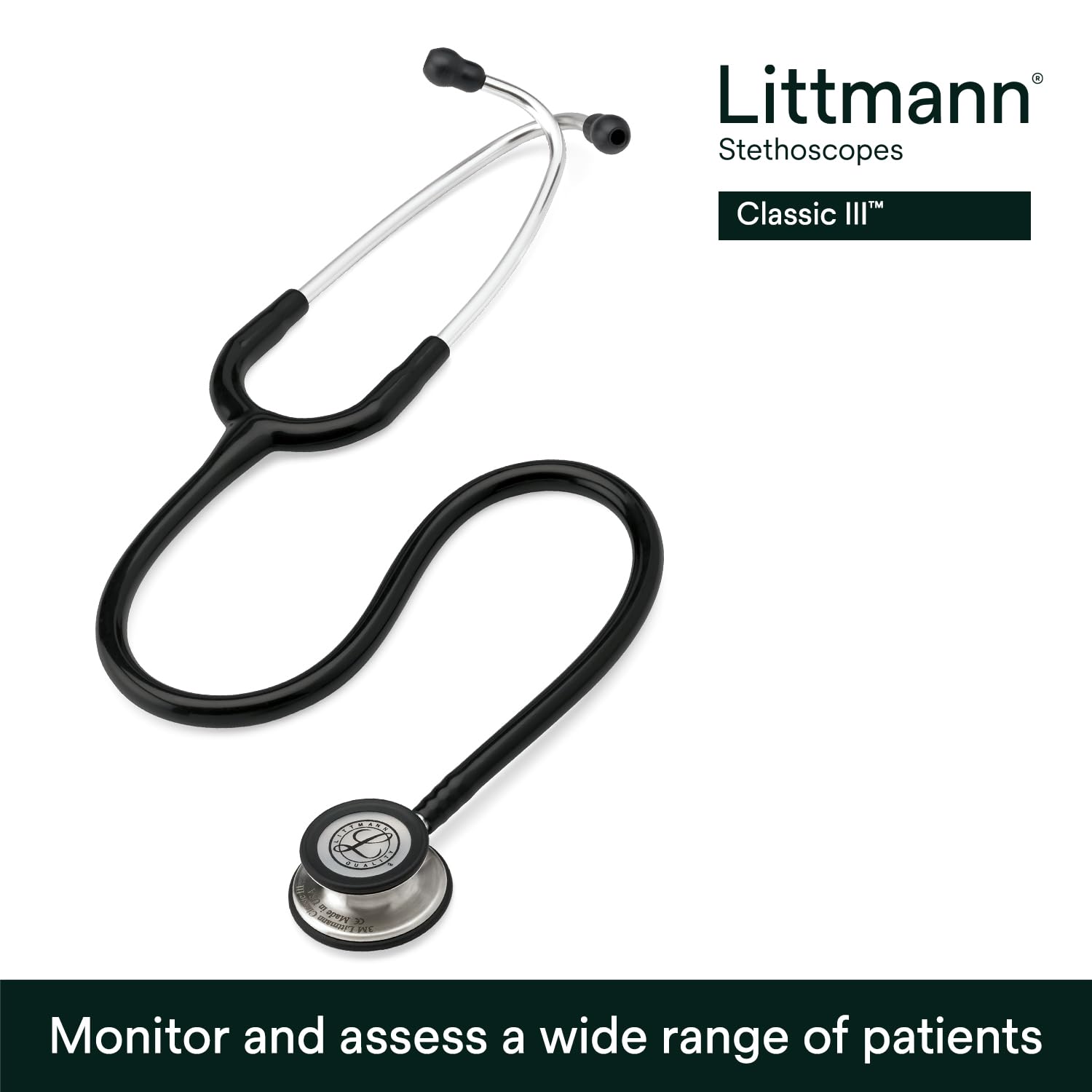
If you’re managing a tight travel-nurse per-assignment budget but still work cardiac, the Littmann Classic III ($115–$130) is the honest middle-ground recommendation: it has a two-sided chest piece with an adult/pediatric convertible diaphragm, and aggregated reviewer feedback positions it as reliably adequate for most cardiac floor assessments — just not for the subtle low-pitched sounds you’d chase in a CVICU.
Intent: [PRODUCT: Littmann Cardiology IV stethoscope, premium tier]
Medical-Surgical and Step-Down Units
Med-surg is acoustically forgiving compared to critical care — you’re primarily assessing breath sounds, bowel sounds, and routine heart tones rather than chasing subtle valve pathology. The Littmann Classic III covers this territory confidently for most nurses. The MDF Instruments Acoustica ($50–$70) is a frequently cited mid-budget alternative that owners describe as punching above its price for breath-sound clarity, though reviewers note the ear tips run small and benefit from aftermarket replacement.
For float nurses who move between med-surg and step-down, the Classic III is the right buy: you won’t be underequipped on the step-down unit, and you won’t have over-invested for your bread-and-butter med-surg days.
Pediatrics and Neonatal
This is where chest-piece geometry matters disproportionately. Adult diaphragms are too large to sit correctly on an infant’s chest, creating seal gaps that degrade sound quality. The Littmann Classic III’s convertible diaphragm (which flips to a smaller pediatric size) addresses this, and neonatal NICU nurses frequently cite the Littmann Cardiology IV with its small adult/pediatric chest piece as their preference for the cleanest sound on very small patients.
The Welch Allyn Harvey Elite is a comparable option that a portion of pediatric-unit nurses prefer for its dual-lumen tube construction and easy-grip chest piece — useful when you’re working around lines and leads. Published specs put its frequency response in the same general range as the Cardiology IV, though direct comparisons in aggregated reviews give the edge to Littmann on low-frequency sensitivity.
Intent: [PRODUCT: Littmann Classic III stethoscope, mid-range tier]
Emergency Department
ED auscultation is a study in compromises: ambient noise is high, you’re often assessing through clothing or at awkward angles, and time pressure is real. Electronic stethoscopes — which amplify sounds electronically rather than relying purely on acoustic transmission — solve the noise problem directly. The 3M Littmann CORE Digital Stethoscope ($260–$290 mid-2026 pricing) and the Eko CORE 500 in the same range both offer ambient noise reduction modes that ED nurses in multi-reviewer roundups consistently call genuinely useful rather than a marketing feature.
The honest tradeoff: electronic stethoscopes require charging, have a battery-fail failure mode, and cost more. If your ED is relatively controlled (smaller facility, less chaos), a Cardiology IV or Classic III handles the job without the dependency. If you’re working a Level I trauma center or a high-volume urban ED, the noise reduction is worth paying for.
Psychiatry, Behavioral Health, and Safety-Sensitive Units
Here the calculus flips. Acoustic performance is less critical than safety design. On psych units, a standard stethoscope with 27–30 inches of standard tubing is a ligature risk and a restraint risk. Per American Nurses Association scope-of-practice guidance on environmental safety in behavioral health settings, clinical tools in psych environments should minimize potential for patient self-harm or use as a weapon.
What to use here: Many facilities supply a dedicated wall-mounted or shared unit instrument. If you’re carrying your own, a breakaway-tubing model or an ultra-short tubing version (some units use modified 18-inch tubing instruments) is the appropriate choice. Acoustic performance is secondary; institutional policy is primary. Check your unit’s policy before purchasing.
Advanced Practice: NP and CRNA
If you’re in an APRN role conducting independent physical examinations — especially in primary care, cardiology, or anesthesia — the acoustic bar is the same as cardiac ICU nursing. The Cardiology IV is the minimum worth considering; many APRNs in cardiology or hospitalist practices report the Cardiology IV as adequate for their entire career without feeling they’re leaving clinical information on the table.
CRNAs operating in procedural settings sometimes prefer electronic amplification for assessing breath sounds post-intubation in noisy ORs. The Eko CORE 500’s published amplification specs (up to 40x ambient amplification) align well with that use case, per reviewers in anesthesia-adjacent professional forums.
By the Numbers: Acoustic Tier vs. Specialty Need
| Specialty Context | Minimum Recommended Tier | Top Pick | Price Range (2026) |
|---|---|---|---|
| Cardiac ICU / CVICU | Cardiology-grade | Littmann Cardiology IV | $215–$240 |
| Med-Surg / Step-Down | Mid-range | Littmann Classic III | $115–$130 |
| Pediatrics / Neonatal | Mid-range + small chest piece | Littmann Classic III (pediatric) or Cardiology IV | $115–$240 |
| Emergency Department | Mid-range to electronic | Littmann CORE Digital or Eko CORE 500 | $260–$290 |
| Psychiatry / Behavioral | Safety-design priority | Breakaway-tubing instrument | Varies by facility |
| APRN / CRNA | Cardiology-grade | Littmann Cardiology IV | $215–$240 |
The Decision You’re Probably Sitting On
Most intermediate-practitioner nurses reading this are in one of three spots:
-
Still using the student kit stethoscope and wondering if the upgrade is real or marketing. It’s real — but only if your specialty warrants it. If you’re on a cardiac or critical care floor, the Cardiology IV pays for itself in clinical confidence. If you’re on med-surg, the Classic III is a smarter upgrade: meaningful improvement, half the price.
-
Just accepted a travel contract in a new specialty. This is the moment to buy right, not cheap. A travel nurse arriving on a cardiac ICU assignment with an entry-level instrument signals inexperience before you’ve introduced yourself. The Cardiology IV is standard-issue for that environment.
-
Moving into an APRN or specialty role and wondering if your current instrument is good enough. Per the ANA’s nursing scope and standards documentation, independent physical examination skills are central to advanced practice — and the instrument quality matters. Buy the Cardiology IV or a comparable electronic model before you start the role, not after your preceptor notices the gap.
The clean decision rule:
- If you’re in cardiac, critical care, or advanced practice → Littmann Cardiology IV. No second-guessing.
- If you’re in med-surg, step-down, or general floor nursing → Littmann Classic III. Meaningful upgrade, right price.
- If you’re in a high-noise environment like a busy ED → consider electronic amplification (CORE Digital or Eko CORE 500). The noise reduction is functionally real.
- If you’re in behavioral health → safety design first, acoustic performance second. Confirm unit policy before you spend anything.
One last thing worth naming: ear tips. Healthline’s overview of cardiac assessment tools notes that earpiece fit is one of the most underappreciated variables in auscultation quality. If you buy the right stethoscope and still struggle to hear clearly, swap the ear tips for a different size before concluding the instrument is the problem. It’s a $10 fix that saves a $200 return.