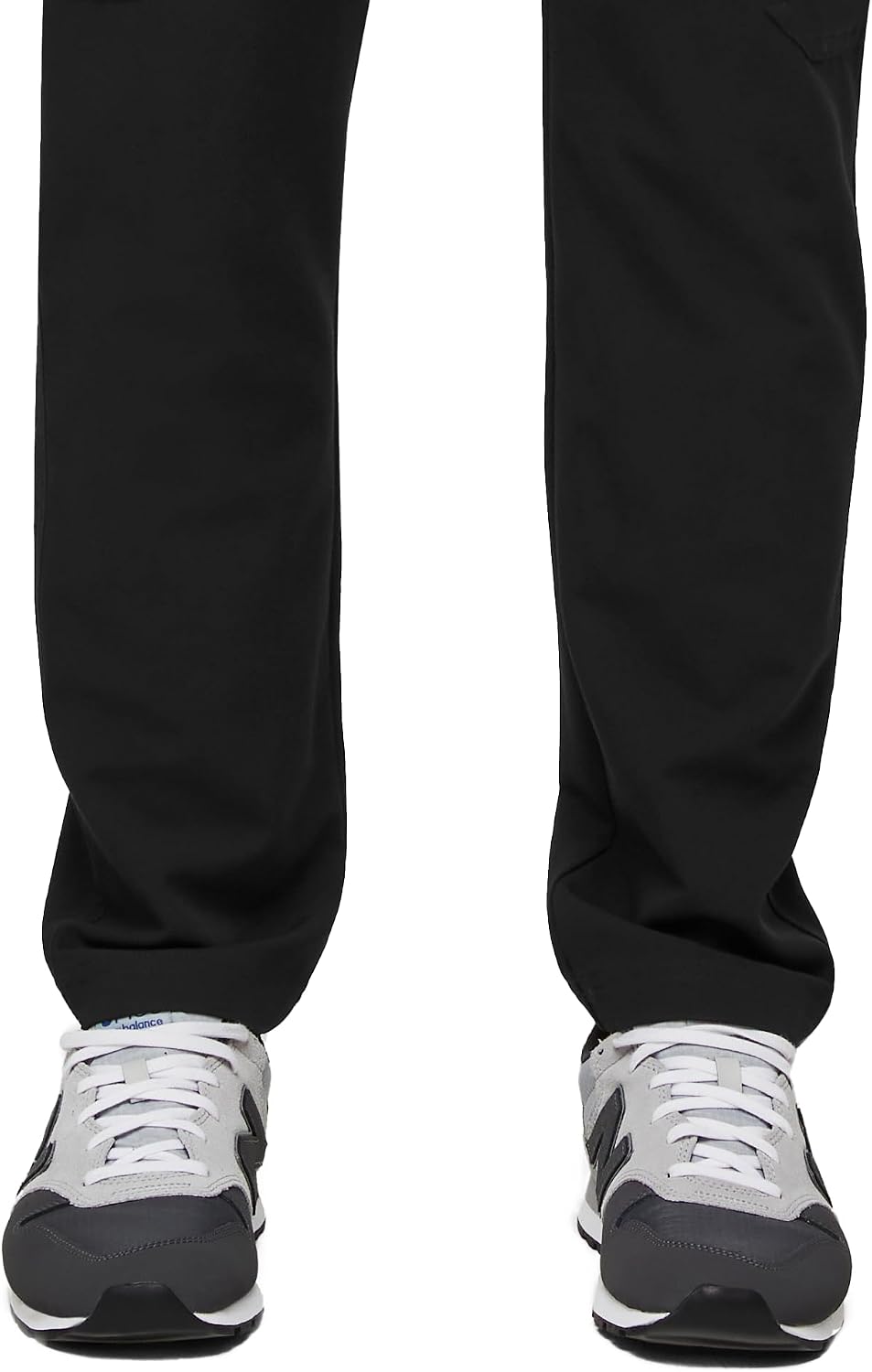
If you’ve ever grabbed a pair of scrubs off the rack and found the waist fits but the thighs are strangling you — or the top drapes like a hospital gown rather than a professional garment — you’re dealing with a problem that’s been baked into the scrub industry for decades. Scrubs (the standardized work uniforms worn by nurses and other clinical staff — typically a v-neck or crew-neck top paired with drawstring pants) were historically cut to a single unisex template that assumed a smaller frame. Most brands retrofitted a “men’s line” by simply widening the chest and calling it done. That approach still shows up in a lot of shelves in 2026. This guide cuts through the marketing language to explain what actually matters in a men’s scrub: fabric composition, cut geometry, and pocket engineering. By the end, you’ll have a clear decision rule for matching the right scrub to your specialty, your body type, and your budget.
| EDITOR'S PICK[Cherokee Scrubs for Men Tapered](https://www.amazon.com/dp/B077YQDY5Y?tag=greenflower20-20)… | Mid-tier[COZYFIT Men Scrubs Set - Stretc](https://www.amazon.com/dp/B0CGR6639D?tag=greenflower20-20)… | Budget pickCherokee Scrubs for Men Tapered… | |
|---|---|---|---|
| Pockets count | 5 | 8 | 5 |
| Top included | — | ✓ | — |
| Waist closure | Drawstring | Yoga waistband | Drawstring |
| Leg style | Tapered | Jogger | Tapered |
| Price | $31.99 | $29.99 | $27.64 |
| See on Amazon → | See on Amazon → | See on Amazon → |
Why Standard Scrub Fits Fail Male Nurses
The fit problem isn’t subtle. A 2024 review in Textile World’s performance healthcare apparel issue noted that the majority of volume scrub lines still source from pattern blocks designed for a tapered female torso, then scale up — rather than drafting from male proportions from scratch. In practice, that means tops with narrow shoulder seams that restrict overhead reach, and pants with a rise (the distance from the crotch seam to the waistband) that sits too low for comfortable bending or squatting during patient transfers.
The three fit dimensions that matter most for male nurses are:
Shoulder width and sleeve pitch. If the shoulder seam sits noticeably inward from your actual shoulder point, you’ll feel resistance every time you reach across a bed or lift. Over a 12-hour shift, that adds up to real fatigue.
Thigh and seat room. Nurses squat, kneel, and pivot constantly. Pants that fit at the waist but are cut narrow through the thigh will either restrict movement or blow a seam. Good Housekeeping’s updated 2025 scrub review specifically flagged thigh room as the most common male-fit complaint across reader-submitted feedback.
Rise height. A low-rise pant (designed to sit below the natural waist) will gap at the back when you bend — not ideal in patient care settings where professional presentation matters. A mid-rise or high-rise cut stays tucked and keeps you covered.
The fix isn’t just “buy a bigger size.” Sizing up typically adds circumference everywhere equally, so you get a top that billows at the torso to accommodate the shoulders. The real answer is brand selection by pattern block, not just size number.
Fabric Reality: What the Spec Sheets Don’t Lead With
Fabric is where scrub marketing gets the most creative with language. Here’s what the terms actually mean at the clinical level.
Polyester-spandex blends (typically 92–95% polyester, 5–8% spandex). This is the dominant fabric in the current mid-range market. Textile World’s 2024 analysis notes that polyester-dominant fabrics offer excellent wrinkle resistance and color retention through repeated industrial washing (the kind hospitals require), but they trap heat more than natural fibers. In a climate-controlled ICU, that’s a minor issue. In a non-air-conditioned long-term care facility or a psych unit that keeps temperatures elevated for patient comfort, it’s worth thinking about.
Cotton-poly blends (typically 55% cotton, 45% polyester). More breathable, softer against skin, but they wrinkle more, shrink modestly over time, and tend to pill faster at high-friction zones — the inner thigh and the pocket edges. If your facility washes scrubs in-house, cotton-poly blends often come out looking worn after 30–40 cycles. Owners of cotton-heavy scrubs in aggregated online reviews consistently mention visible pilling and fabric thinning within the first year of daily wear.
Four-way stretch fabrics. “Four-way stretch” means the fabric stretches in all four directions (lengthwise, widthwise, and both diagonals), not just two. For nurses who move aggressively — patient lifts, code response, working around narrow ED bays — this is a genuine functional upgrade, not just a marketing term. The tradeoff is that stretch fabrics are thinner and can show more body contour than structured woven fabrics, which matters to some nurses in professional contexts.
Moisture-wicking treatments. Most performance scrub fabrics carry a moisture-wicking finish that pulls sweat away from skin and spreads it across the fabric surface to evaporate faster. The NIOSH ergonomics for healthcare workers publication (2023) specifically calls out thermal comfort as a factor in sustained physical performance during long shifts. The practical caveat: wicking treatments degrade with washing, especially with bleach or high-pH detergents that hospitals commonly use. A scrub that wicks well when new may lose that performance by cycle 50.
By the Numbers
| Fabric Type | Breathability | Wash Durability | Stretch | Typical Price Range |
|---|---|---|---|---|
| Poly-spandex blend | Moderate | High (80+ cycles) | High | $25–$60/piece |
| Cotton-poly blend | High | Moderate (30–50 cycles) | Low–Moderate | $15–$35/piece |
| Premium tech fabric (e.g., Tencel/poly blends) | High | Moderate–High | Moderate | $50–$90/piece |
Pocket Engineering: Where Most Scrubs Quietly Fail
Pocket design is the detail most buyers overlook when reading a product listing — and the one they notice most by hour four of a shift. For male nurses specifically, pockets aren’t decorative; they’re functional real estate for tools that affect patient safety.
Pocket depth. A pocket that looks substantial but is only 4–5 inches deep will lose a pen every time you bend. Useful minimum depth for pen/scissors security: 6 inches. Some scrub lines publish pocket dimensions; many don’t. Across reviews aggregated on retail platforms, nurses consistently report that “deep pockets” in the product listing often means 5 inches — sufficient for a phone on a flat surface, not sufficient for secure tool carry during movement.
Cargo vs. slash pockets. Cargo pockets (the boxy, external patch pockets on the thigh) hold volume but shift weight downward and can swing against equipment or patients. Slash pockets (angled openings set into the pant side seams) keep weight centered and feel more streamlined. Which you want depends entirely on your unit: ICU nurses loading a pocket with a calculator, phone, and multiple pens often prefer cargo architecture. ED nurses who move fast through tight spaces often find cargo pockets a nuisance.
Phone pocket placement. As of 2026, most units expect nurses to carry a mobile device for electronic health record (EHR — the digital patient charting system) access and communication. Top-line scrub brands now include a dedicated phone-specific pocket, typically on the left chest or upper thigh, with a secure-enough opening to prevent drop during bends. If this isn’t present in a scrub top, your phone goes in a general pocket and competes with everything else for space.
Pen loops vs. pen pockets. A pen loop (a small fabric loop sewn into the pocket interior) holds a pen vertically and clips-in without it migrating. An unlooped pocket pocket loses pens horizontally the moment you bend at the waist. This is a $0 manufacturing decision that separates well-engineered scrubs from afterthought ones.
Brand-by-Brand Decision Framework
You’re buying scrubs mid-career, which means you’ve already learned that the cheapest option often costs more over time. Here’s how to think about the current market tiers.
Entry tier ($15–$30/piece): Cherokee Workwear. Cherokee’s men’s fits have improved as of their most recent refresh — the V-neck tops now have a slightly adjusted shoulder seam that sits closer to the actual male shoulder point than the previous generation. The fabric is primarily a poly-cotton blend, which explains the accessible price and the familiar complaint about pilling after heavy washing. For nursing students or nurses on a rotation budget who need a functional baseline, this is the honest entry recommendation. Owners report adequate pocket depth for standard carry, and the fit is more workable than most competitors at this price.
Mid tier ($55–$80/piece): FIGS men’s scrubs. FIGS built its reputation partly on actually drafting male cuts from male proportions — the Rafaela and Axim lines are genuinely worth the premium for nurses who spend their shift physically active. Reviewers and long-term owners consistently call out the four-way stretch and the shoulder seam placement as meaningful differences from volume-market scrubs. The tradeoff is price per piece and the brand’s thinner fabric weight, which some nurses find shows wear or wrinkles more than a heavier poly-spandex blend would. Good Housekeeping’s 2025 scrub review rated FIGS highly for fit geometry specifically. The pocket depth on FIGS pants consistently measures at or above 7 inches per published spec and owner measurement reports — notably deeper than most competitors.
Premium tier ($90–$130/piece): Jaanuu men’s tailored sets. Jaanuu’s men’s line is the clearest option for nurses in charge roles, clinical educators, or advanced-practice settings where professional appearance functions as part of clinical credibility. The cut is structured — closer to tailored pants than athletic scrubs — and the fabric carries antimicrobial treatment that, per the manufacturer’s published specs, is designed to maintain efficacy through 50+ industrial wash cycles. The pockets are well-engineered with phone-specific placement. The tradeoff is price and the fact that structured fabrics restrict movement more than four-way stretch — fine for a charge nurse making rounds, less ideal for a floor nurse doing full patient care.
Specialty note for psych and behavioral health. The American Association of Critical-Care Nurses’ 2023 healthy work environments guidance doesn’t speak to psych-specific scrub requirements, but the clinical consensus in unit-level practice is consistent: avoid loose drawstrings, external tool pockets with exposed edges, and heavy cargo architecture. A fitted mid-rise pant with internal-slash pockets and no exterior hardware is the baseline safer choice for behavioral health units. None of the above brands manufacture a psych-specific men’s line, but the Jaanuu structured cut with modified pocket load-out comes closest to meeting those requirements off the shelf.
The Decision Rule
Here’s the if-then framework based on everything above:
- If you’re on a student or per-assignment budget: Cherokee Workwear men’s updated fit gives you the best value-per-shift at the entry tier. Buy two sets minimum so you’re not washing every 24 hours.
- If you’re a floor nurse doing full physical patient care: FIGS men’s line — specifically for the shoulder geometry and pocket depth. The price is real, but owners report durability across 18–24 months of daily wear, which makes the per-shift cost math competitive with cheaper options that wear out in 12 months.
- If professional presentation is part of your role (charge nurse, NP, educator, unit manager): Jaanuu tailored men’s sets. The structured cut and antimicrobial fabric durability justify the premium in settings where appearance carries weight.
- If you work psych or behavioral health: Prioritize fit over brand. Fitted mid-rise pants, internal slash pockets, no exposed hardware, no loose drawstrings — filter for these features first, then choose the highest durability fabric within your budget.
The biggest mistake male nurses make when buying scrubs is treating fit as a fixed variable and trying to solve for it with size alone. Fit is a pattern-block decision made at the brand level. Read for shoulder seam placement, rise height, and thigh circumference specs before you order — Healthline’s occupational standing overview and the Textile World performance fabric analysis both reinforce that physical comfort during long shifts isn’t a preference issue, it’s a performance and endurance issue. Buy the scrub that was designed for how you actually move.