If you’ve ever finished a 12-hour shift with aching arches, a numb heel, or that specific burning pain across the ball of your foot, your shoes are the most likely culprit — and the fix is more specific than “just get a good pair of clogs.” A clog (the slip-on, usually backless shoe that has become a staple on hospital floors) can be one of the smartest things you own or one of the most punishing, depending on how well it matches your arch type. Your arch is the curve along the inner edge of your foot; it acts as a built-in shock absorber, and when your footwear doesn’t support it correctly, your knees, hips, and lower back start doing overtime to compensate. This guide breaks down what to look for by arch shape and shift length so you can make the choice once, wear it for years, and stop losing the last hour of every shift to foot pain.
Why Arch Type and Shift Length Are Inseparable
Most clog buying guides treat foot support as a single axis: more cushion equals better. It’s not that simple once you’re past the student-on-a-budget phase, and by six months on the floor you probably already feel the difference.
The three arch profiles that matter for clinical footwear:
-
High arch (supinated or underpronated foot): The inner edge of your foot barely contacts the ground. Your weight rolls to the outside of the foot. You need cushioning that absorbs the impact your arch isn’t distributing, plus a footbed wide enough to let your foot spread without compression.
-
Neutral arch: The most structurally accommodating profile — most mainstream clogs are built around this shape. You have more flexibility in what works, but “neutral” doesn’t mean “any shoe fits”; it means you don’t have a correction problem, so don’t add one by buying a clog with aggressive medial posting (an inward-angled wedge on the sole) designed to correct overpronation.
-
Flat foot / low arch (overpronated foot): The inner arch collapses toward the floor with each step. Over a 12-hour shift, this translates into internal knee rotation and hip-flexor stress. You need structured arch support — a firm medial post or a removable footbed you can swap for a custom orthotic.
The Journal of Foot and Ankle Research published data in 2023 showing that healthcare workers who spend more than eight hours per shift standing or walking report significantly higher rates of plantar fasciitis (inflammation of the connective tissue running along the bottom of the foot) and metatarsalgia (pain across the ball of the foot) compared to workers with shorter shift profiles. The finding the study emphasized: mismatch between arch type and footwear rigidity was a stronger predictor of pain than total hours worked alone. In other words, the right shoe for a six-hour shift can become the wrong shoe for a 12-hour shift at a different level of support.
Shift Length as the Deciding Variable
Here’s the practical frame: think of your footwear needs in three shift bands.
By the numbers:
- Under 8 hours: Cushioning is the priority; arch correction matters less because fatigue accumulation is lower.
- 8–10 hours: Arch support and heel cup stability become co-equal to cushioning.
- 12+ hours (the standard three-day block): Structured arch support, rocker sole geometry (a curved sole that propels the foot forward without requiring full toe-off), and a removable footbed for orthotics move to the top of the list.
This isn’t just theory. Good Housekeeping’s 2025 nursing clog roundup specifically noted that reviewers who work 12-hour shifts rated overall comfort differently from reviewers in administrative or clinic roles, with long-shift nurses overwhelmingly favoring clogs with firmer midsoles even when those same clogs felt “stiff” compared to softer options in short wear tests. Soft foam compresses and bottoms out under extended load; a structured midsole holds its geometry across a full shift.
Matching Arch Type to the Right Clog Features
High Arch
What goes wrong without the right shoe: The outsole edge takes the impact that your arch isn’t absorbing. Over time, this shows up as lateral ankle pain, IT band tightness, and the outside edge of your clog sole wearing faster than the center.
What to look for:
- Deep heel cup: Cradles the heel and prevents lateral rock. The heel cup is the curved section inside the shoe that holds your heel in place.
- Cushioned but not compressible midsole: You want EVA foam (ethylene-vinyl acetate, the material used in most modern athletic midsoles) that’s thick enough to absorb shock, but dense enough not to collapse under load. Look for dual-density EVA — a firmer base layer with a softer top layer.
- Rocker sole geometry: Reduces pressure on the heel strike and toe-off points, which is where high-arch feet tend to concentrate load.
- Wider toe box: High-arch feet often have structural tightness across the metatarsals (the five long bones in the midfoot); a narrow toe box accelerates forefoot fatigue.
Clog tiers to consider: Dansko Professional clogs ($130–$160) have a rocker bottom and deep heel cup that owners with high arches consistently single out in aggregated reviews. For a premium step up, reviewers note that On Nursing shoes ($140–$170) use the brand’s CloudTec sole to distribute impact across multiple contact points rather than routing it to a single edge — a design choice that aligns well with the high-arch load pattern.
Neutral Arch
What goes wrong without the right shoe: Not much — if the shoe fits your volume (the total interior space around your foot). The risk for neutral-arch wearers is buying a shoe marketed to a specific correction (aggressive arch posting for overpronators, for example) and introducing a problem they didn’t have.
What to look for:
- Proportional arch support: Enough to prevent fatigue over long shifts without overcorrecting.
- Removable footbed: Gives you the option to add a neutral or lightly supportive insole as shifts get longer or your needs change.
- Firm heel counter: The rigid back portion of the shoe that keeps the heel from sliding side to side. Even neutral arches lose stability when the heel counter is soft.
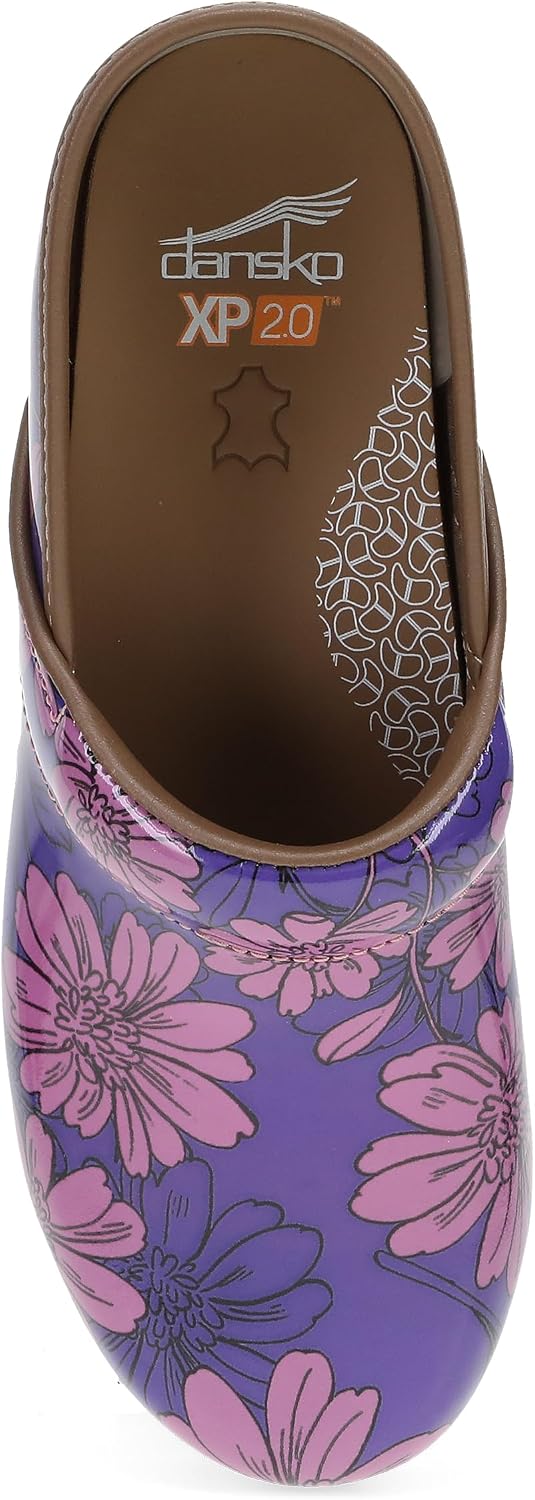
Clog tiers to consider: Healthline’s 2025 nursing shoe overview rates Dansko Professional and Dansko XP 2.0 as consistent performers for neutral-arch wearers across long shifts. The XP 2.0 adds a memory foam footbed over the rocker bottom, which reviewers in the 8–10 hour range prefer; the Professional’s firmer base tends to draw higher ratings from 12-hour-shift wearers who have switched from softer options.
Flat Foot / Low Arch
What goes wrong without the right shoe: Arch collapse under load. By hour six, your knee is internally rotating with each step to compensate for the pronation. By hour twelve, your lower back has joined the conversation. Plantar fasciitis is a specific risk — the American Podiatric Medical Association’s patient education resource notes that low-arch and flat-foot profiles are among the highest-risk populations for plantar fascia strain when footwear lacks adequate medial support.
What to look for:
- Firm medial post: A denser material on the inner side of the midsole that resists inward collapse. Not every clog has this; it’s worth checking the spec description before buying.
- Removable footbed with orthotic compatibility: If you’re flat-footed, a custom or over-the-counter orthotic (a shoe insert with arch correction) will do more for you than any built-in footbed. A clog that can accommodate one is worth paying more for.
- Low heel-to-toe drop: The drop is the height difference between the heel and the forefoot inside the shoe. Lower drop (8mm or under) distributes weight more evenly and reduces the strain on the Achilles tendon that often develops in flat-footed wearers.
- Structured outsole, not flexible: A clog that bends easily under load will not resist arch collapse. Flex the shoe before you buy: it should resist twisting along the midfoot.
Clog tiers to consider: Based on published specs, Dansko’s Professional clog has enough midsole structure to serve as a baseline for mild overpronation. For moderate to significant flat-foot presentations, owners in long-form review threads consistently report that swapping the stock footbed for a Superfeet Green or Powerstep Pinnacle insert (both available in clog-compatible sizes) makes a meaningful difference — and that the Dansko Professional’s removable footbed makes the swap straightforward. If you’re already in a travel-nurse assignment where standing on unfamiliar floor surfaces adds load variability, a custom orthotic from a podiatrist is the version of this upgrade that pays for itself.
The Tradeoffs You Need to Name Before You Buy
Rocker sole vs. flat sole: A rocker sole propels you forward — great for high volumes of walking, less ideal if your floor requires precise lateral movement (some psych and procedural environments). Flat soles give you more ground-feel and lateral control.
Backless clog vs. strap: Backless clogs increase ventilation and are faster to get on and off — which matters in certain clinical environments. But without a heel strap, your foot subtly grips the clog with each step, which recruits calf and toe flexors you didn’t plan on using. Over a 12-hour shift, that adds up. If you’re a flat-footed or high-arch nurse going longer shifts, a strap or enclosed heel is worth the tradeoff in convenience.
Clog weight: Lighter is not always better. Heavier clogs tend to have denser midsoles; owners consistently report that the extra few ounces of a denser shoe feel like nothing by hour ten compared to the energy cost of a collapsed-foam midsole in a lighter shoe.
Break-in period: Dansko Professional clogs are consistently noted in reviews for a real break-in period — typically one to two weeks of shorter wear before they conform to your foot. Plan for that if you’re buying before a new assignment starts.
The Decision Rule
If you’re still deciding after reading this far, use this frame:
- High arch + 12-hour shifts → rocker-bottom clog with deep heel cup, dense dual-layer EVA; On Nursing or Dansko Professional are the anchors to evaluate.
- Neutral arch + any shift length → prioritize removable footbed and heel counter firmness; Dansko XP 2.0 for 8–10 hours, Professional for 12.
- Flat foot + 8+ hours → orthotic compatibility is non-negotiable; buy the clog that fits your orthotic, not the other way around.
- Any arch type + under 6 hours in low-acuity settings → comfort-first is defensible; a softer midsole is fine when cumulative load is lower.
Your feet will tell you within two weeks if you got it right. The signal to watch for isn’t just pain — it’s where the pain is. Lateral foot or ankle ache points to insufficient cushioning for your arch type. Plantar or heel pain points to inadequate support. Knee or hip fatigue at the end of a shift often traces back to the shoe, not the shift itself. If that pattern persists after a reasonable break-in period, the shoe isn’t wrong because it’s a bad shoe — it’s wrong for your foot. Start with the arch, then match the shift length, and you’ll spend a lot less time having this conversation with yourself at 0600 when the shift finally ends.